

Cyberport
Pok Fu Lam, Hong Kong
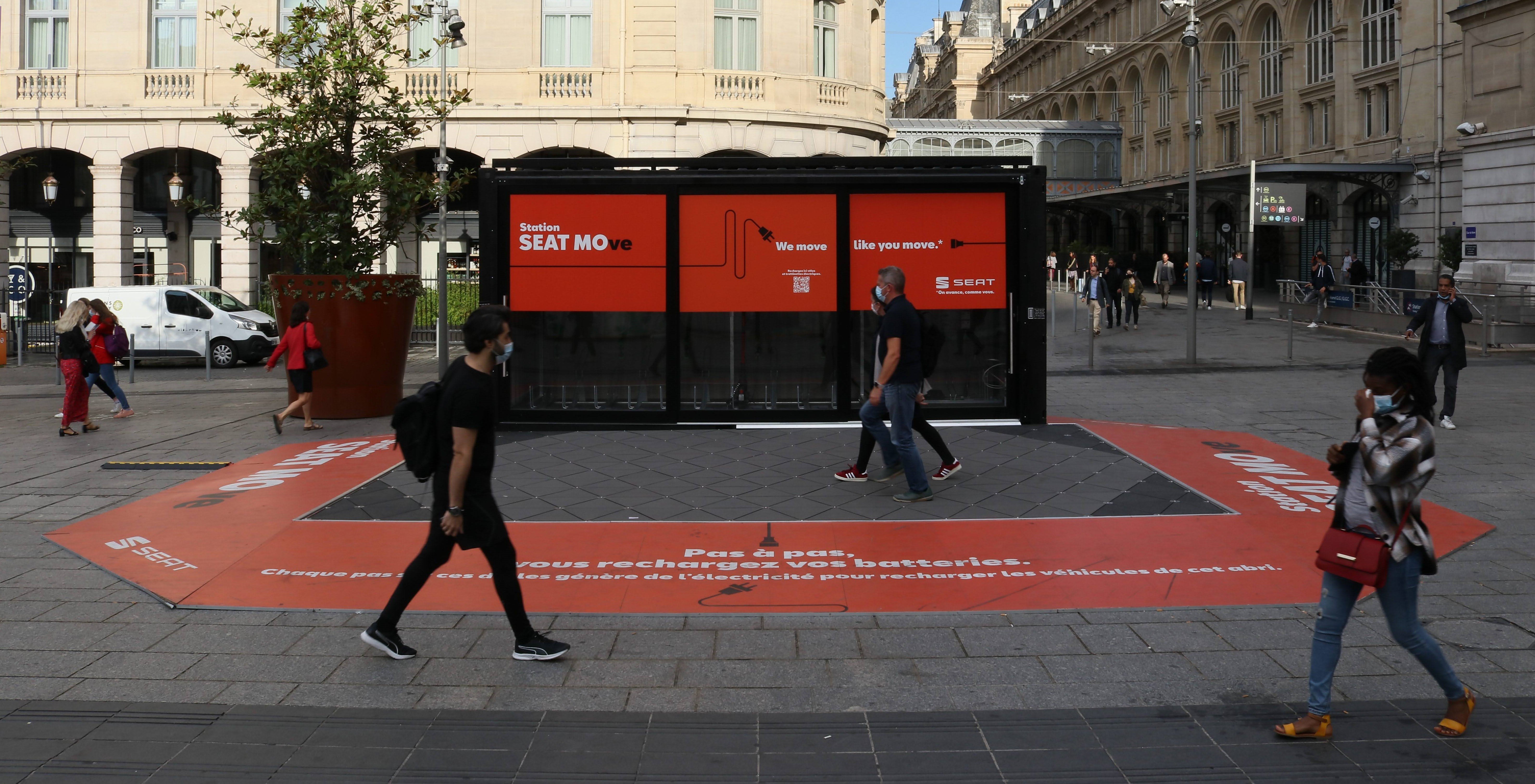
Pavegen and Tribal Planet worked to create a deeper engagement with Cisco’s brand and enhance its reputation in a fun and memorable way at its headline annual event.
We helped engage Cisco’s audience of IT specialists with its Social Impact programme in a lasting and engaging way.
Via Tribal Planet’s Citizen Earth app and screens, attendees could track their steps and see how much energy they were personally creating, simply by walking over the tiles. Daily winners would be announced via the app leaderboard and screens on-site.
Cisco’s goal was 1 million steps. The installation really caught the imagination of Cisco LIVE audiences,
The team doubled that target, capturing the energy of over 2 million footsteps.
How Cyberport Used Movement To Spark a New Wave Of Smart-City Engagement
Cyberport‑5 represents one of Asia’s most ambitious smart‑city developments - and Pavegen was chosen as the kinetic energy partner after a rigorous selection process involving global technology providers. The Hong Kong SAR Government sought solutions that could demonstrate innovation at scale, integrate seamlessly with major infrastructure, and engage the public in a meaningful way. Pavegen’s proven track record in people‑powered energy and data made it the standout choice, earning its place alongside Gammon Construction and Siemens in this landmark project.
Designing infrastructure that responds to people
The Challenge
As Hong Kong accelerates its transformation into a global smart city, Cyberport faces increasing pressure to demonstrate what next‑generation urban innovation looks like in practice - not just in policy papers or strategy decks, but in the physical environment people move through every day.
Cyberport‑5, the HK$3.7 billion expansion of the campus, needed to deliver on several fronts:
- Showcase Hong Kong’s commitment to clean, future‑ready infrastructure
- Demonstrate smart‑city technology that is visible, intuitive, and public‑facing
- Engage a diverse audience - from government officials to founders, students, investors, and international delegations
- Turn a high‑traffic outdoor space into a meaningful touchpoint for sustainability
- Integrate seamlessly with a major construction programme led by Gammon and Siemens
- Provide real‑time data that proves impact, not just promises it
Cyberport didn’t want another static installation or a symbolic gesture. They wanted a solution that would:
- Bring the smart‑city narrative to life
- Invite public participation without disrupting flow
- Make clean energy tangible and emotionally resonant
- Demonstrate measurable ESG value
- Serve as a flagship example of how people and infrastructure can interact in new ways
The Approach
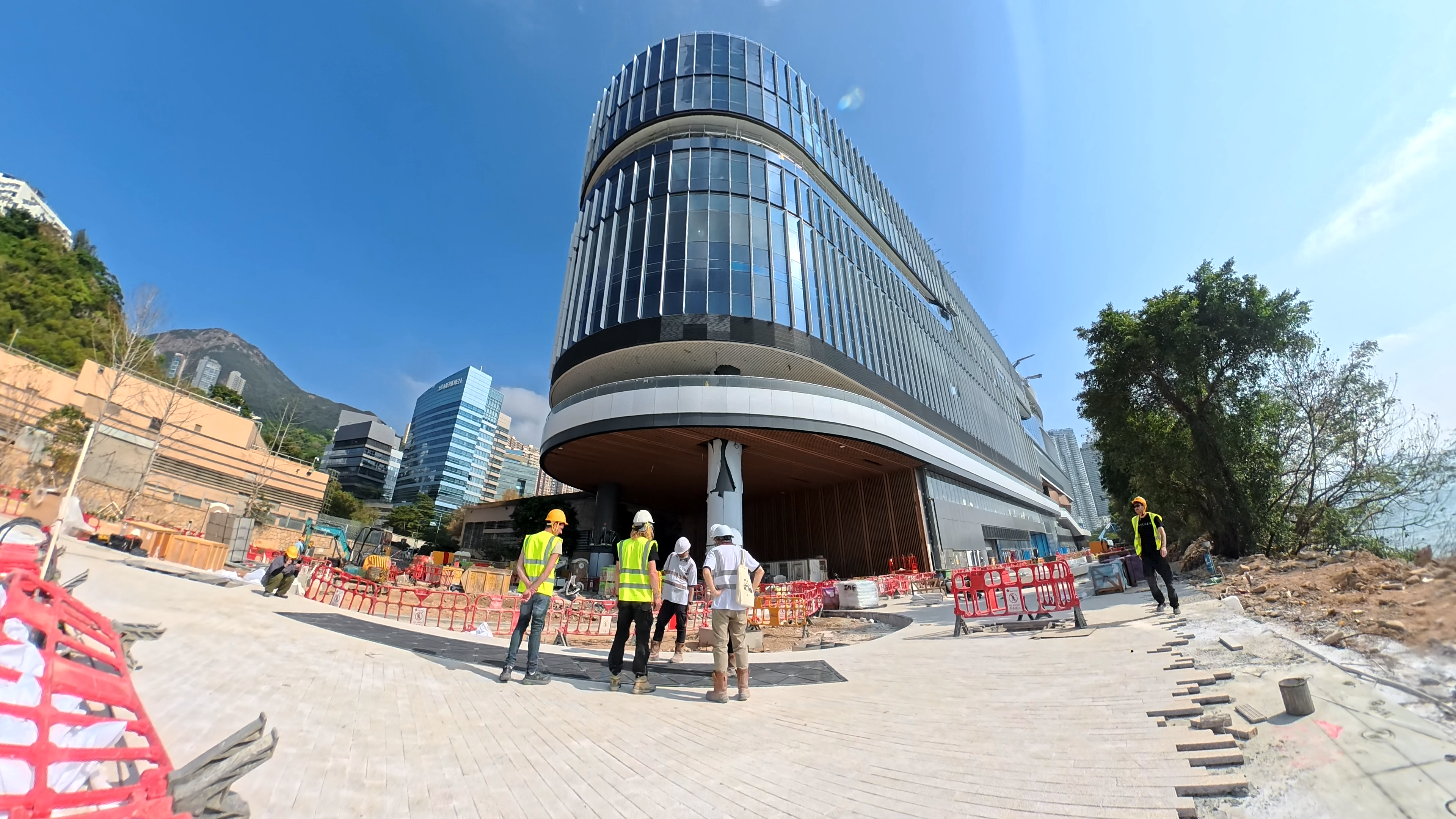
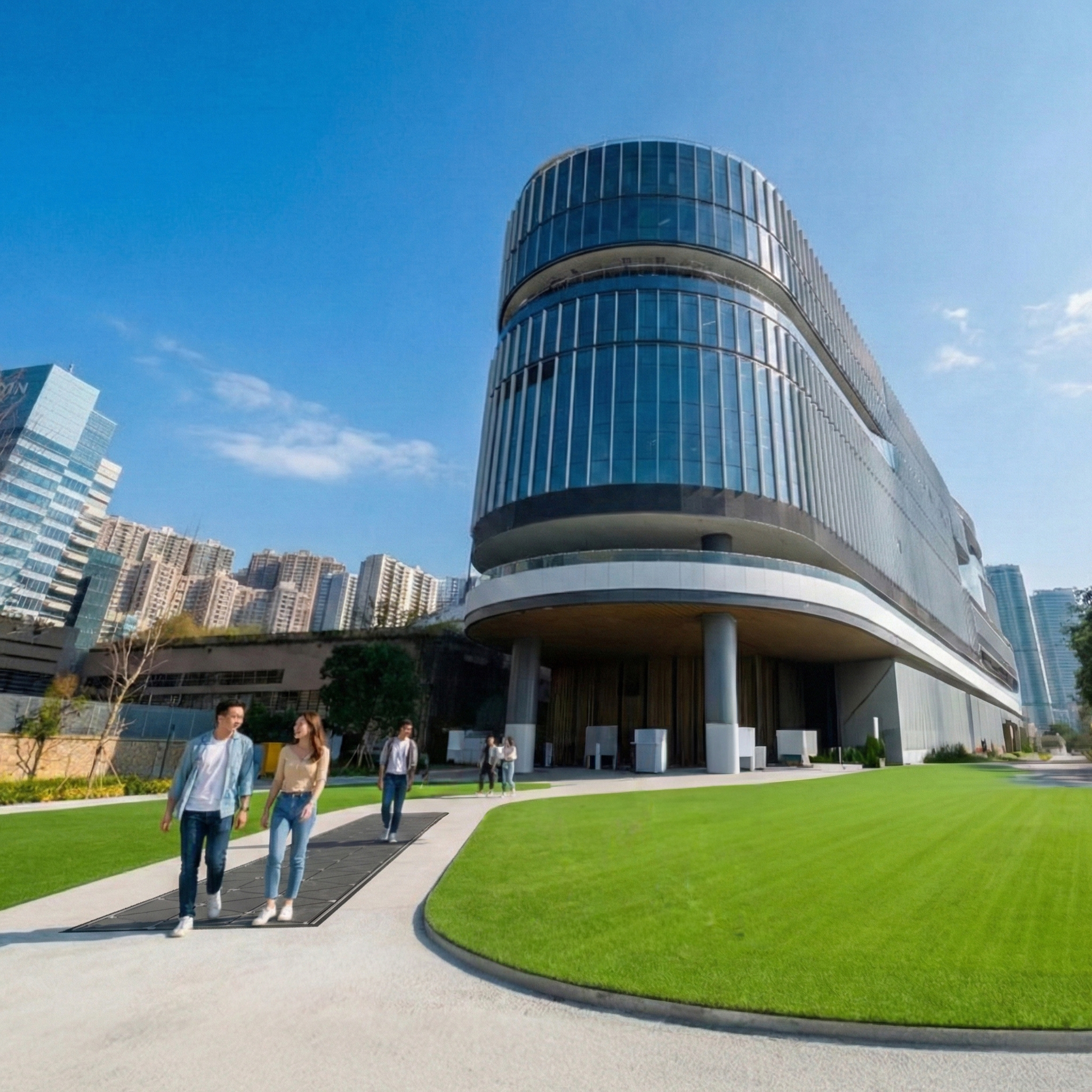
Pavegen designed and engineered a kinetic energy array positioned outside the new 10‑storey smart building at Cyberport‑5. The installation transforms pedestrian movement into clean electricity, stored in on‑site batteries and used to help power the upgraded waterfront park’s outdoor lighting.
The approach combined three core elements:
1. Infrastructure‑grade clean energy: The array was engineered for long‑term durability and high‑footfall environments, demonstrating how human movement can meaningfully contribute to decentralised energy systems.
2. Real‑time digital insight: Through Siemens’ Insights Hub, the installation provides live cloud‑based analytics, enabling Cyberport and Pavegen to monitor energy generation, understand usage patterns, and optimise performance over time.
3. Public participation at the heart: Every step taken on the array becomes a micro‑contribution to the site’s energy ecosystem. This creates a direct emotional connection between people and place - a hallmark of Pavegen’s experiential sustainability approach.
Working alongside Gammon Construction ensured seamless integration into the wider development, aligning engineering, installation, and smart‑city objectives from the outset.
GAMIFYING
SIEMENS PURPOSE
Pavegen is based in King’s Cross, in the heart of London’s tech revolution. We’re just a few minutes’ walk from King’s Cross and St. Pancras International Stations. Our research and development centre operates in Cambridge, the innovation hub of the country.
Why it Matters: People Powered smart Cities
Just as we’ve seen in large‑scale projects like Sport's Boulevard Foundation in Riyadh and Dupont Circle in Washington, the Cyberport‑5 installation reinforces a core truth about Pavegen’s role in the future of urban infrastructure: when people can see and feel their impact, engagement becomes instinctive.
This isn’t passive sustainability. It’s participation. Every step becomes a contribution, every contribution becomes data, and that data becomes a living demonstration of how citizens and infrastructure can work together.
At Cyberport, a simple walkway now acts as a bridge between public behaviour and smart‑city intelligence. Pedestrians don’t just pass through the space - they power it. They generate clean energy, trigger real‑time insights, and experience firsthand how their movement shapes the environment around them. That emotional connection is what transforms a technology installation into a meaningful public asset.
This is where Pavegen delivers its deepest value. We don’t just generate energy; we generate understanding. We turn everyday movement into a moment of reflection - a reminder that sustainability isn’t abstract, it’s personal. For a government‑owned innovation hub like Cyberport, this kind of interaction becomes a powerful symbol of what people‑centric smart cities can be.
Smart Cities Need Human Interaction
As cities evolve into interconnected digital ecosystems, expectations are shifting. Citizens want environments that are not only efficient, but intuitive, responsive, and aligned with their values. They want to feel part of the system, not simply surrounded by it.
The Cyberport‑5 installation embodies this shift. A walkway that once blended into the background now acts as a point of discovery. Movement triggers energy, energy triggers insight, and insight triggers connection. It’s a loop that makes the smart‑city narrative tangible - not through screens or signage, but through lived experience.
This mirrors what we’ve delivered in other urban contexts like Old Spitalfields Market in London and The Quayside in Hong Kong, where public participation became the catalyst for awareness, conversation, and long‑term behavioural change.
Cyberport‑5 proves that the future of smart cities won’t be defined by passive systems alone. It will be shaped by interactive, human‑powered infrastructure that invites people to play a role in the places they move through every day. And that’s exactly where Pavegen thrives - at the intersection of technology, sustainability, and human behaviour.
.jpg)