
How to Turn A Car Dealership into an Experience People Actually Remember
26 February 2026
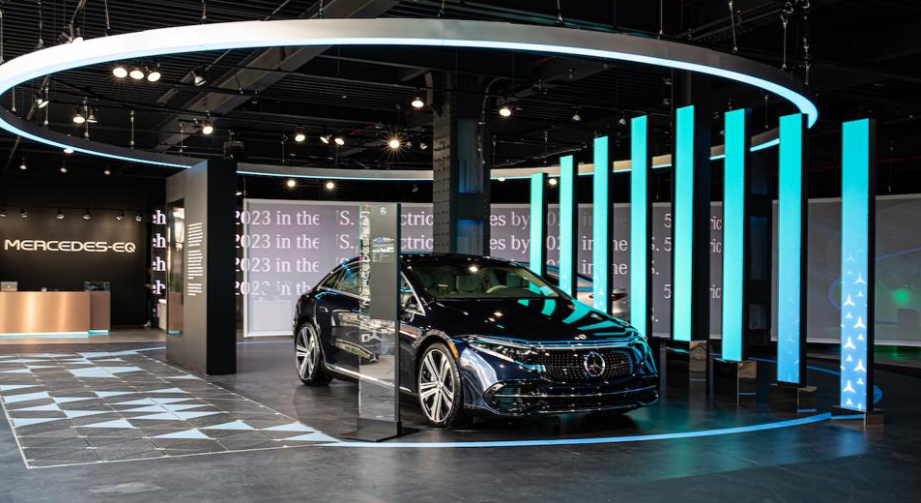
Car dealerships are undergoing one of the biggest shifts in their history. Customers now arrive with more information, more expectations, and more emotional pressure than ever before -especially when exploring electric vehicles. In this landscape, the dealership showroom is no longer just a place to display cars. It’s a brand’s most powerful opportunity to create an experience people actually remember.
This guide explores how dealerships can transform their spaces into high‑impact, emotionally resonant environments that drive engagement, trust, and sales - drawing on our work with leading automotive brands across Europe, the Middle East, and Asia.
1. Designing For Emotion, Not Just Layout
A dealership visit is an emotional moment. Customers walk in with excitement, hesitation, curiosity, and often a sense of overwhelm - particularly when navigating the transition to EVs. The most effective dealerships design around these emotional states rather than simply arranging vehicles on a floor.
Lighting, sound and spacing shape how customers feel as they move through the space. When the environment feels intuitive and human, people relax. And when they relax, they explore more deeply, ask better questions, and form stronger connections with the brand.
2. Use Movement to Create Engagement Loops
Static showrooms create passive customers. Dynamic dealerships create participants.
Movement‑based experiences - interactive floors, guided pathways, responsive lighting, kinetic installations - turn the showroom into a place where customers do something, not just look at something.
Examples of movement‑driven engagement:
-
- Interactive walkways that trigger lighting or energy data
- Test‑drive simulators that activate when stepped onto
- Pathways that guide visitors through EV features or sustainability stories
We’ve seen this repeatedly in our work with brands like Kia, Ford, and Volvo, where movement‑led experiences increased dwell time, boosted emotional engagement, and helped customers understand new technologies more intuitively. When visitors become part of the environment rather than observers of it, the dealership becomes a destination rather than a transaction point.
Why it matters: When people move, they engage. When they engage, they remember. And when they remember, they convert.
3. Make Sustainability Visible, Not Theoretical
Every automotive brand talks about sustainability. Very few make it tangible. Customers want to see the brand’s commitment, not just read about it on a wall. This is especially true for EV buyers, who are often seeking reassurance about the brand’s long‑term vision.
Dealerships that integrate visible, interactive sustainability - whether through hybrid energy surfaces, real‑time energy displays, or tactile materials - create a deeper sense of trust. When visitors can physically experience the brand’s environmental story, it becomes far more credible and memorable.
4. Turn Dwell Time Into Discovery Time
There are natural pauses in every dealership visit: waiting for a test drive or waiting for a sales advisor. These moments are often overlooked, yet they hold enormous potential. When dwell time becomes discovery time, the dealership shifts from a transactional environment to an exploratory one.
Immersive storytelling zones, hands‑on EV education, and interactive brand content turn waiting into learning. Customers stay longer, engage more deeply, and form stronger emotional connections with the brand. In dealerships, time spent is one of the strongest predictors of purchase intent - and dealerships that design for this reality outperform those that don’t.
5. Measure Behaviour, Not Just Impressions
Traditional dealership metrics - footfall, test drives, sales - only capture the outcome, not the journey. Modern automotive brands need behavioural insight to understand what truly influences decisions. Where people spend time, what they interact with, how they move through the space, and which moments create emotional peaks all reveal what’s working.
Behavioural data allows brands to refine layouts, optimise storytelling, and justify investment in experiential upgrades. It also creates a feedback loop between physical and digital touchpoints, helping brands build a more cohesive customer journey.
6. Build A Showroom That Feels Like The Future
The automotive industry is shifting from product‑led to experience‑led. Customers don’t just want to see the future of mobility - they want to feel it. A future‑ready dealership is modular, energy‑positive, emotionally intelligent, and designed for participation rather than observation.
Spaces that blend physical and digital, integrate visible sustainability, and create moments of genuine interaction stand out in a crowded market. They become destinations, not just dealerships. And in an era where brand loyalty is fragile, destinations win.
A dealership that people remember isn’t defined by how many cars it displays. It’s defined by how it makes people feel. When automotive brands design for emotion, movement, and meaningful interaction, the dealership becomes more than a retail environment - it becomes a powerful catalyst for connection, trust, and conversion.
Ready to reinvent your dealership experience? Let’s build a space your customers will never forget.