
15 April 2026
If you're a brand manager, a creative director, or an agency lead staring down at a brief that says "do something different" this one's for you.
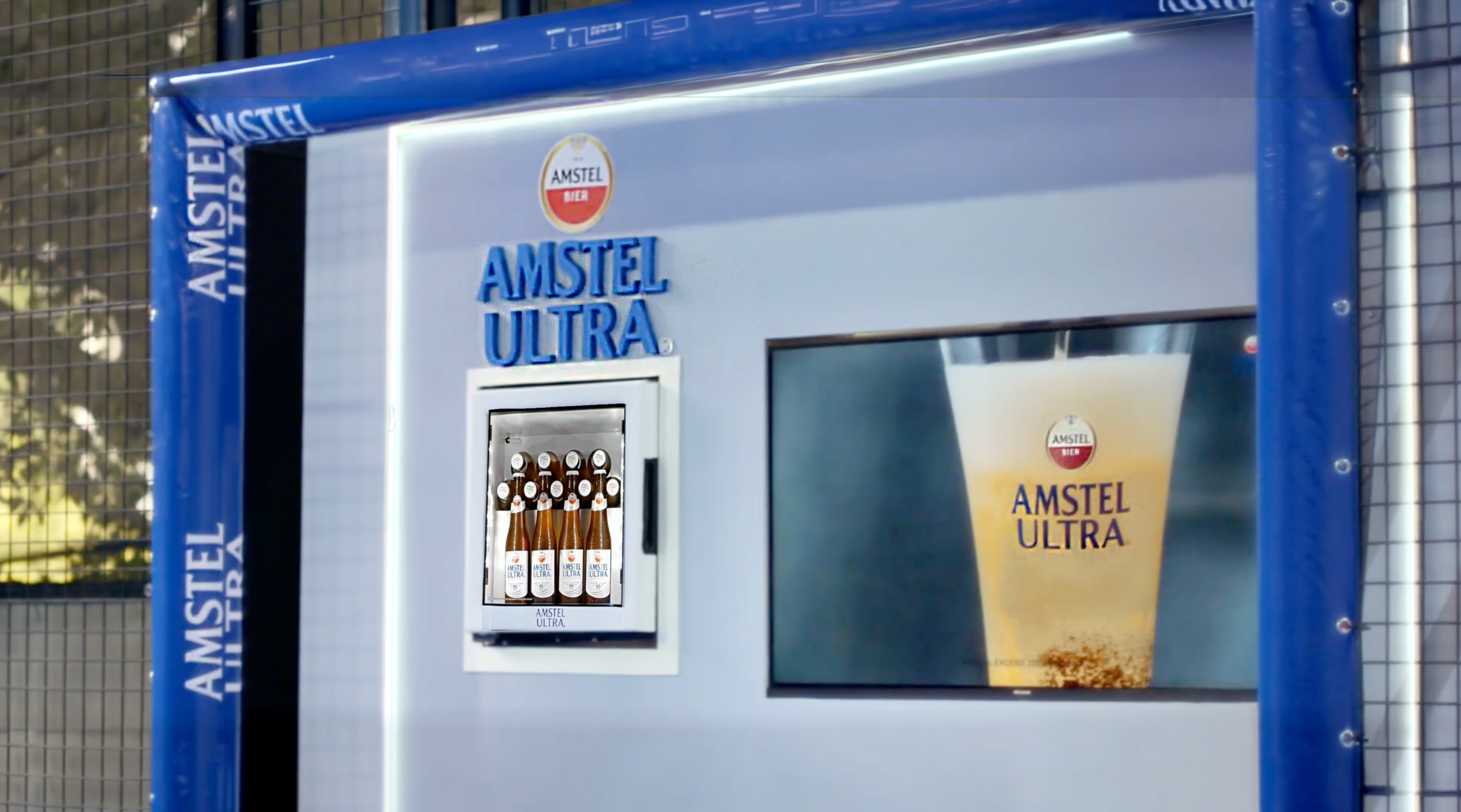
LePub, part of the Publicis network, set a new benchmark for what a sports activation can actually be. No banners, logos on screens, or even an ambassador awkwardly holding a product they've never used. Just a padel court in Mexico City, a fridge full of cold Amstel Ultra, and a brilliantly simple idea nobody had the nerve to try until now.
The players powered the court. The court powered the fridge. The fridge powered the celebration.
That's it. That's the campaign. And it worked better than most activations with ten times the budget.
Why Sports Sponsorship
Here's the thing nobody in a boardroom wants to say out loud: most sports sponsorships are a waste of money.
Not because sport isn't valuable. It is. Padel alone has over 30 million players worldwide, courts booked out weeks in advance, and a cultural grip on young professionals in markets like Mexico that most brands would kill for. The sport is electric, the audiences are engaged, and the energy is unmatched.
The problem is what brands do with it.
Logos surrounding the court, branded merchandise at the entrance or even a QR code nobody scans are activation strategies built for the 90s. Players don't stop to look at your banner. They're too busy playing. The attention is there it's just pointed somewhere traditional sponsorship will never reach.
LePub understood that Sport is Not a Billboard, so they built something that didn't ask for attention but earned it.
How Amstel Ultra Cracked Experiential Marketing in a Competitive Beer Market
The brief LePub brought to Pavegen was sharp: create an activation that felt like part of the padel experience, not an interruption of it. Something players would engage with without being prompted, share without being incentivised, and remember without being reminded.
In November 2025, Pavegen installed its kinetic energy flooring at Marbella Club de Pádel - one of Mexico City's most prestigious venues. The tiles sit flush with the court surface and convert the energy of every footstep, sprint, and lunge into off-grid electricity.
That energy was routed directly to a refrigerator stocked with ice-cold Amstel Ultra beers. The harder players worked, the more energy they generated, and the colder and more deserved that beer felt when the final point was played.
It sounds simple because it is. That's the point.
Read the full Amstel x Pavegen case study.
Why The Cooling Court Worked as an Experiential Marketing Campaign
Most activations treat their audience as spectators - trying to impress them, photograph them next to a branded backdrop, or hand a flyer to on the way out. The Cooling Court made players the engine of the entire experience. That shift from audience to participant is the difference between a brand activation people tolerate and one they genuinely remember. When your effort is the thing that makes something happen, you have a stake in it. You feel involved and you talk about it.
The activation was also camera-ready without trying to be. Nobody briefed players to film it or handed them a script, but a padel court that powers its own celebration is exactly the kind of moment people film and post without thinking twice, because it's unexpected and the story tells itself in under ten seconds.
In a media environment where branded content is everywhere and trust in advertising is lower than it's ever been, the most valuable thing a campaign can do is give journalists and creators an actual story to tell. The Cooling Court had a story. A beer brand and a technology company figured out how to make a padel court power a fridge. That's a headline that writes itself and doesn't need a media budget to get there.
What This Means for Agencies and Marketing Directors
If you're sitting on a brief for a sports activation, an experiential campaign, or a brand moment that needs to cut through in a market that's already saturated, the lesson from The Cooling Court isn't "use kinetic flooring." It's simpler than that.
Stop asking how to get your brand in front of the audience. Start asking how to make your brand useful to the experience they're already having.
The padel court was already there. The players were already there. The social energy was already there. LePub and Pavegen didn't manufacture a moment - they found one, and built something that made it better. That's the brief that produces work worth talking about.
If you've got a brief, a venue, or just a conviction that your next activation should do more than look good on paper let's talk.